
I Have Been Using BPC-157 Myself for Two Years Then My Aging Dog Started Struggling With His Joints And This Is How Peptides Fixed It
A story about a man, an old lab, a box of supplements that didn't work, and the thing that was sitting in his own cabinet the whole time.

Published August 12, 2026 · 7 min read
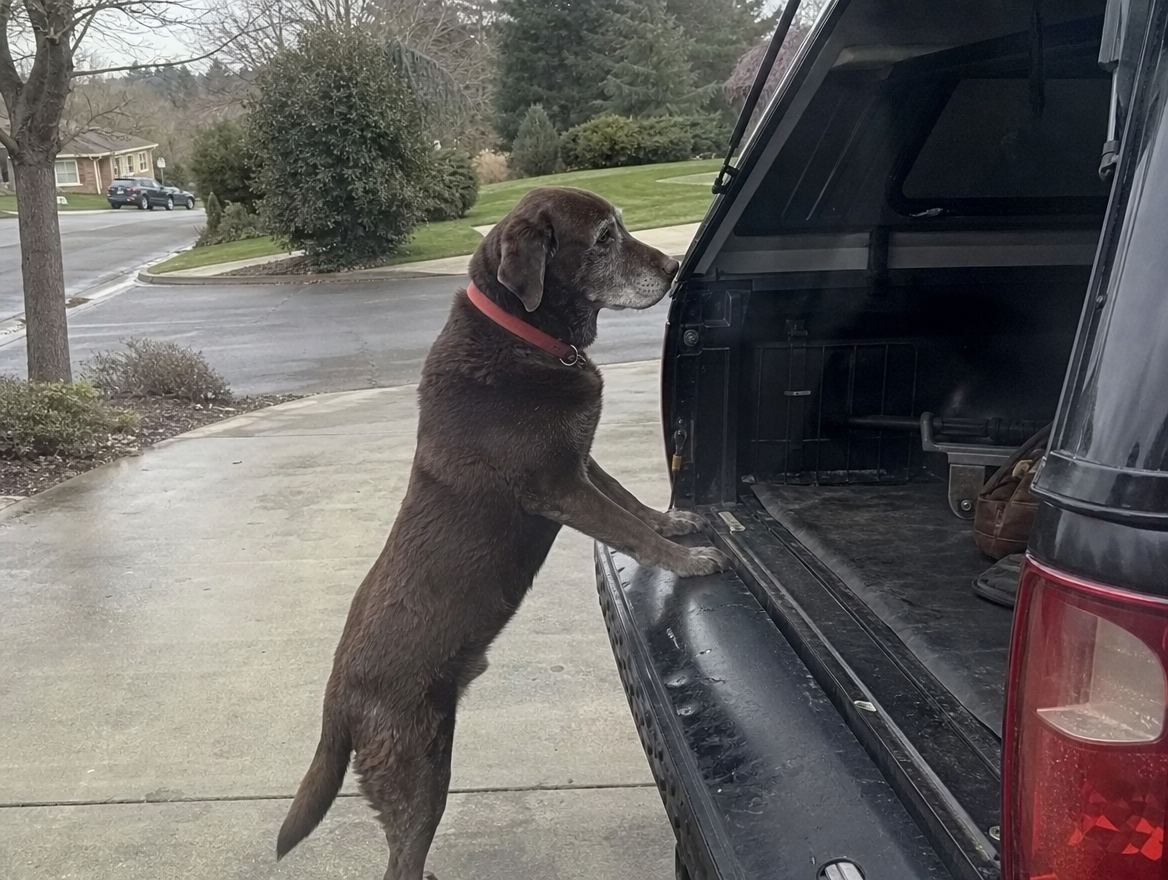
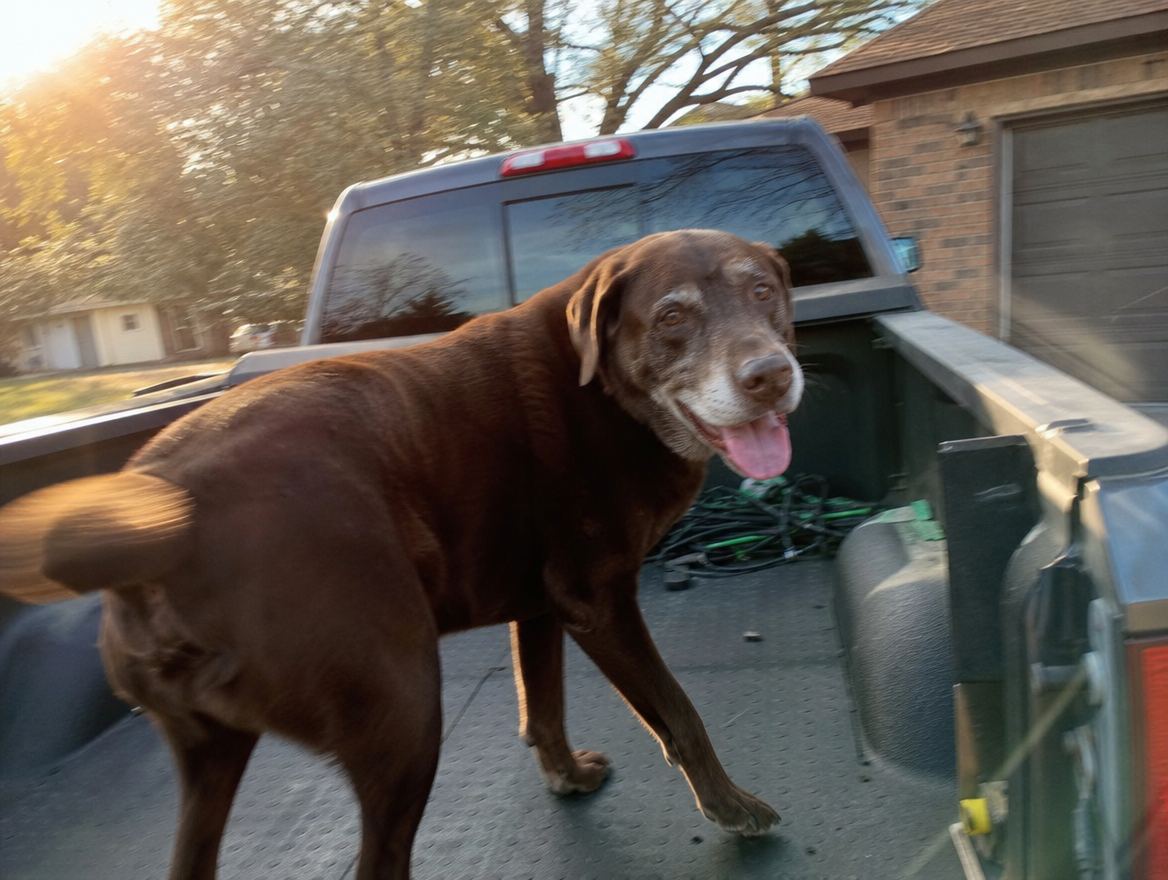
Dale is 58. He's had labs his whole adult life — seven of them — and he'll tell you he knows exactly how the story goes with an old dog, because he's watched it end four times.
So when Boone, his oldest, started taking the stairs one step at a time, Dale didn't panic. He did what he'd always done. He told himself the dog was getting old.
Then Boone stopped getting up.
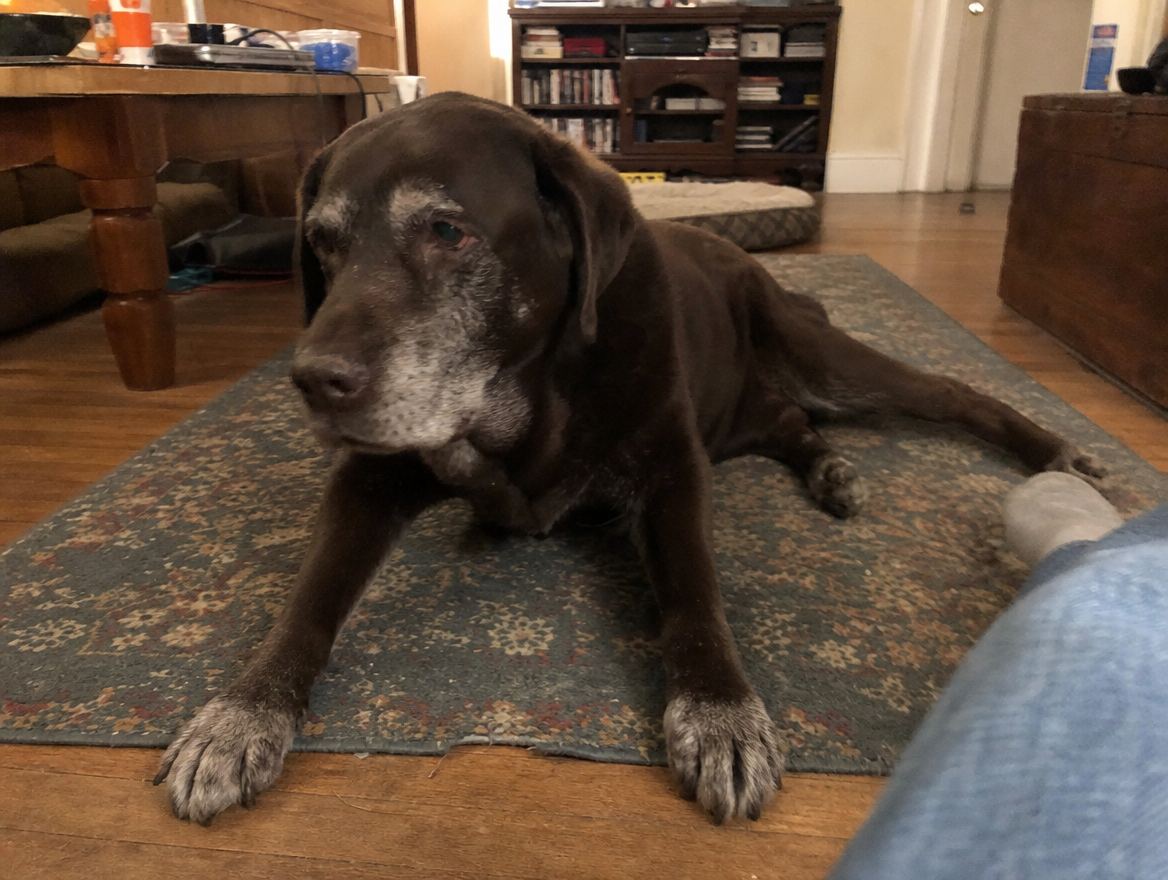
Not all at once. First it was the slow push off the floor after a nap — front legs up, a pause, then the back end. Then it was the bed: a jump that got him halfway and a look over his shoulder for help. Then the morning Dale came downstairs and Boone didn't come to meet him, because he couldn't get his back legs under him at all.
Dale carried him outside to do his business for four days.
"Sixty pounds of dog," he says, "who had never once in his life needed help getting anywhere. Looking at me the whole way like he was embarrassed."
The conversation
Boone came back from that — slowly — but a few weeks later Dale's vet had the conversation with him. If you've had an old dog, you know the one. The one about quality of life. The one where they're kind about it and you want to throw something.
Dale told him the dog was happy. He slept in the sun, he ate better than Dale did, he still thumped his tail when the truck pulled in.
The vet said that wasn't what he meant.
Dale left with a prescription for the pain — the vet told him plainly it was for the pain and nothing else — and a feeling he describes as being handed a countdown.
The box in the garage
He did what everyone does next. He bought things.
Hip-and-joint soft chews — two brands, then three. A powder you spoon onto the food. Mushroom chews. A root extract that came with a dropper. A bottle of boswellia. A bag of food that cost more than his own groceries. A chewable with a veterinarian's face on the label that Boone would not touch, not once, not ever, no matter what Dale wrapped it in.
Over about a year the box in the garage filled up with half-used jars. Some of them might have helped a little. Most of them Boone wouldn't eat — he could smell a pill through a chicken breast and would walk away from the whole plate.
And then one evening, standing in front of that box, Dale pulled two of the chews off the shelf and read the panels side by side.
Glucosamine. Chondroitin. A little MSM. Some egg membrane, some green-lipped mussel. Different label, different dog on the front.
Same jar.
The thing in his own cabinet
Here's the part of the story Dale is a little sheepish about.
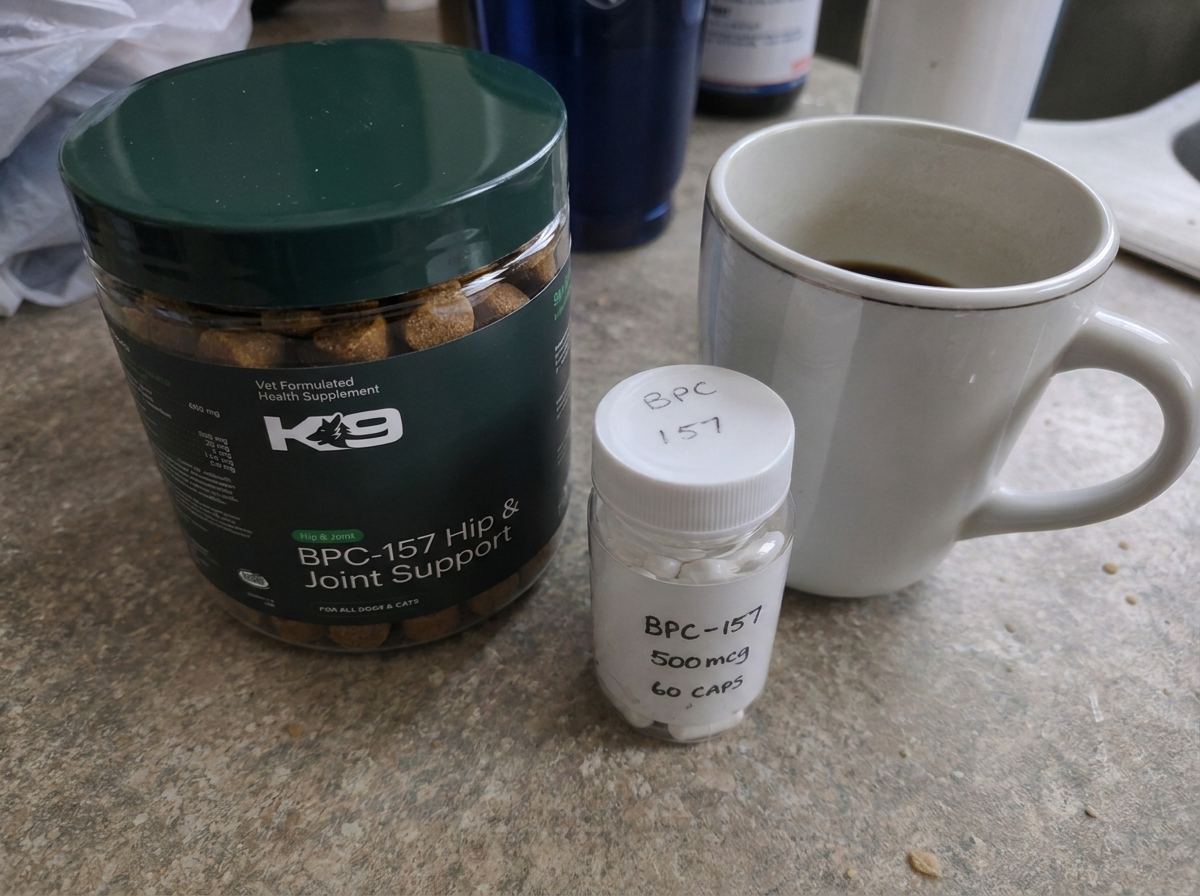
Every morning for two years — through the stairs, the bed, the four days of carrying, the conversation, the box — Dale had been taking a supplement of his own.
It's a peptide called BPC-157. If you're reading this you may already know it; a lot of men his age in the recovery and longevity world do. Dale got onto it the way most of them did: his own research, a doctor who'd never heard of it, and a body that was telling him to try something. He rides dirt bikes when he can, not as often as he'd like, and the mornings after used to cost him three or four days.
"They don't anymore," he says. "That's my whole testimonial. I take it every day and I notice when I run out."
And one morning, standing in the kitchen with the capsule in his hand and Boone on the rug behind him, the thought finally landed:
"I felt stupid," Dale says. "It had been in the house the whole time."
Why it wasn't that simple
Dale is the kind of man who reads the label before he reads the reviews, so he went looking. What he found was that the thought was right and the execution was a dead end in every direction he tried.
He got further down this road than he's proud of. Research peptide, a vial, reconstitute it, inject the dog — the way the biohackers do it. He had it in the cart. A friend who also takes it asked him one question: you're going to pin a sixty-pound animal who can barely stand, every morning, and stick him? He closed the tab.
On paper the clean answer. BPC-157 is unusual among peptides in that it's stable in stomach acid — it was first identified in gastric juice — so an oral capsule works. In practice, Boone could smell a capsule through anything. Dale had already watched him walk away from a plate of chicken because something was hidden inside.
This was the one Dale was sure about, and the one he turned out to be wrong about. Dog treats are baked or extruded. You don't cook a peptide and expect it to still be the peptide — heat breaks the chain. So when he saw "BPC-157 dog treats" for sale, he assumed they were a label and a cookie and moved on.
He was right about the worry. Most of them are a label and a cookie. What he was wrong about was the assumption that baking was the only way to make a treat.
Why this is happening now
Five years ago, BPC-157 was something a few biohackers talked about on forums. Today it's one of the most-searched peptides in the country. Men who'd never taken a supplement in their lives are on it. Their doctors are catching up. And a growing number of them are asking the same question Dale asked in his kitchen.
The people who got there first are already giving it to their dogs. Not injecting — most of them refuse to. They found an oral form their dog will take, and they're quietly reporting what they see: the get-up after a nap, the walk, the couch. One at a time. Word of mouth. Guys telling other guys with old labs.
This is early. Most dog owners have never heard the word peptide. The ones who have are moving first.
What he found
It was the reviews that stopped him first — a small company, a handful of early customers, and every review written by someone who sounded like him. Men with old labs. Men who took the peptide themselves. Men who'd cancelled orders that shipped from China.
Then the label. Then the part that answered the question he'd been stuck on for a year:
They don't bake it.
K9 Labs makes its BPC-157 chew by cold-pressing — forming the chew under pressure at low temperature, with no baking and no extrusion — specifically so the peptide survives the trip from raw material to jar. The founder, it turned out, had gone down Dale's exact road: injected his own dog, hated it, tried baking treats at home, had them tested, and found out he'd cooked the good part out.
So he changed how they're made. And he tests every batch for BPC-157 after pressing, not before.
"That was it for me," Dale says. "Anyone can print a name on a panel. Show me the number from the other end."
What Dale checked before he ordered
- The same 15-amino-acid sequence he takes. 500 mcg per chew, dosed by the dog's weight.
- Cold-pressed. No baking, no extrusion, no heat step.
- Pressed in-house in California. Nothing ships from overseas.
- Third-party tested every batch — after pressing. Identity, purity, heavy metals, microbials.
The certificate of analysis for the current batch, with the lab's name and the batch number. It's on the product page. Past batches are archived.
He also noticed what wasn't on the label. No vet's face. No "clinically proven." No promise about week four. Just the peptide, the amount, the lab, and where it's pressed.
"First jar I'd picked up in two years," he says, "that talked to me like I could read."
Day one
The thing Dale was most worried about wasn't whether it would work. It was whether Boone would eat it. He'd been burned by a shelf full of things the dog wouldn't touch.
He set the chew down. Boone sniffed it. Dale held his breath.
Boone took it.
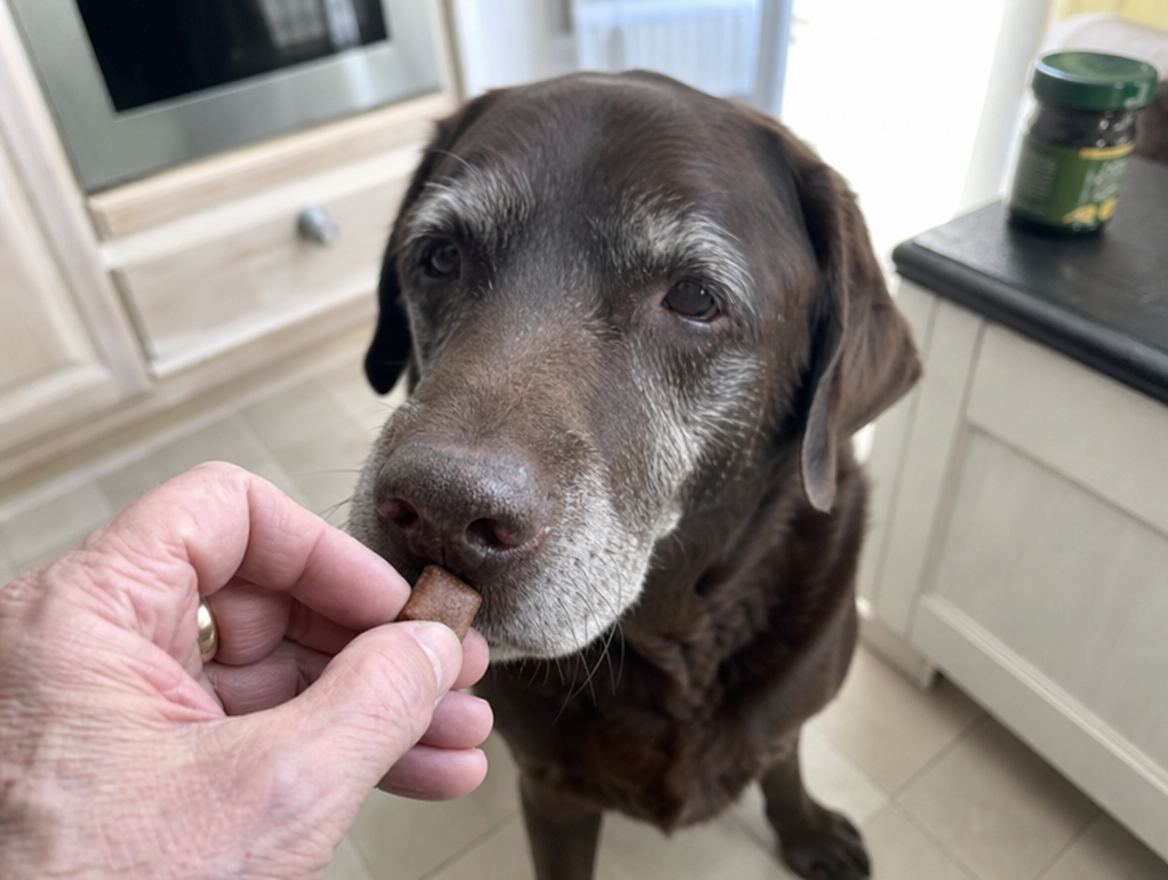
Dale wrote down where the dog was that day — gets up slow, drags on the bad days, won't do the step into the truck — and decided not to change anything else for sixty days. That's the rule he uses for his own cabinet. He didn't see why the dog should get a shorter one.
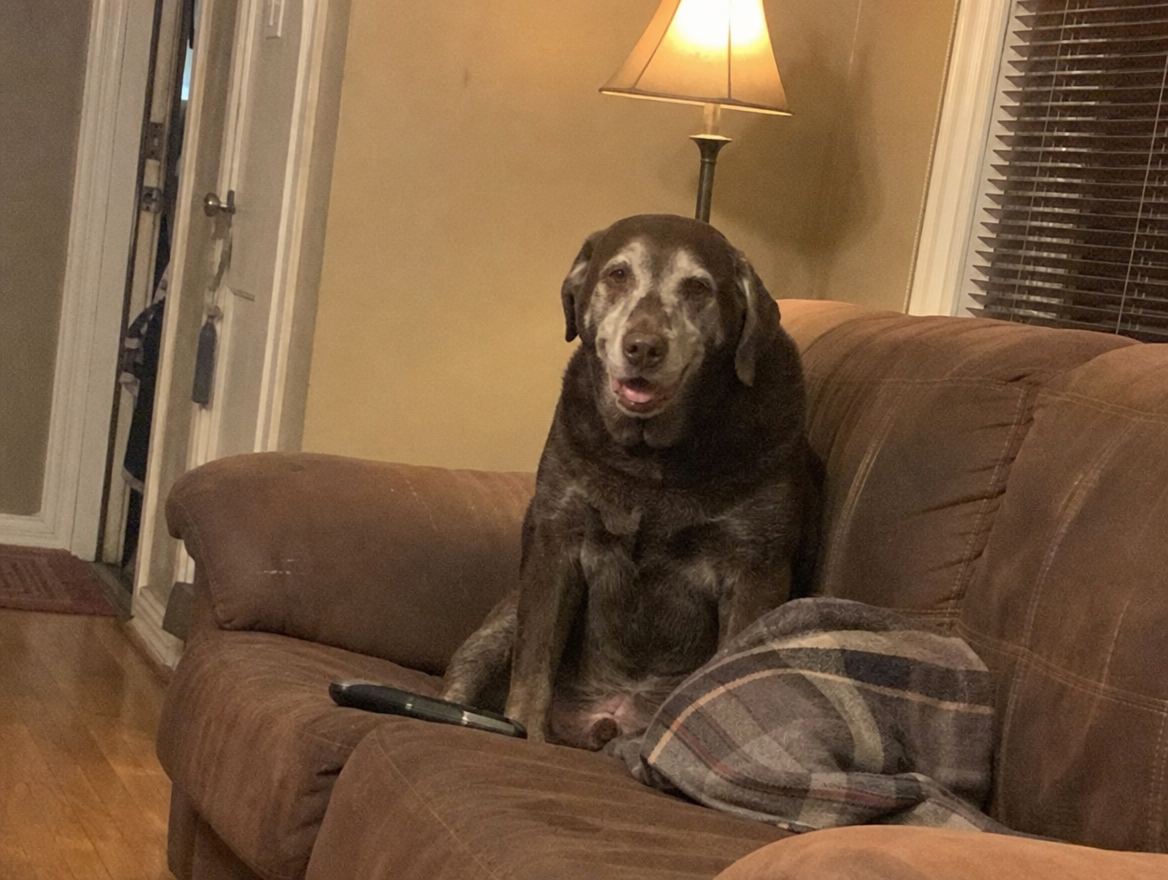
We’ll add Dale’s sixty-day follow-up here when it comes in, whichever way it goes.
If this sounds like your house
You know if it does. You take the peptide. You've got the shelf your doctor doesn't approve of. You've got an old dog on the rug and a box in the garage, and somewhere in the last year you've had the thought Dale had in his kitchen.
Start with the old one. Dose by weight, give it with breakfast, give it the full window — nobody sees anything at week two with anything. Read the label yourself. Open the certificate. Check where it ships from. You already know how to vet this stuff; you've been doing it for your own cabinet for years.
There's a 90-day guarantee and they take an opened jar back. If Boone had spit it out on day one, that's what Dale would have used.
One more thing, and Dale said it better than we could: "He's not getting any younger while I think about it." Every week you spend reading panels in the garage is a week the old dog doesn't get back. You already know how to check this stuff. Go check it.
Cold-pressed BPC-157 Hip & Joint Support
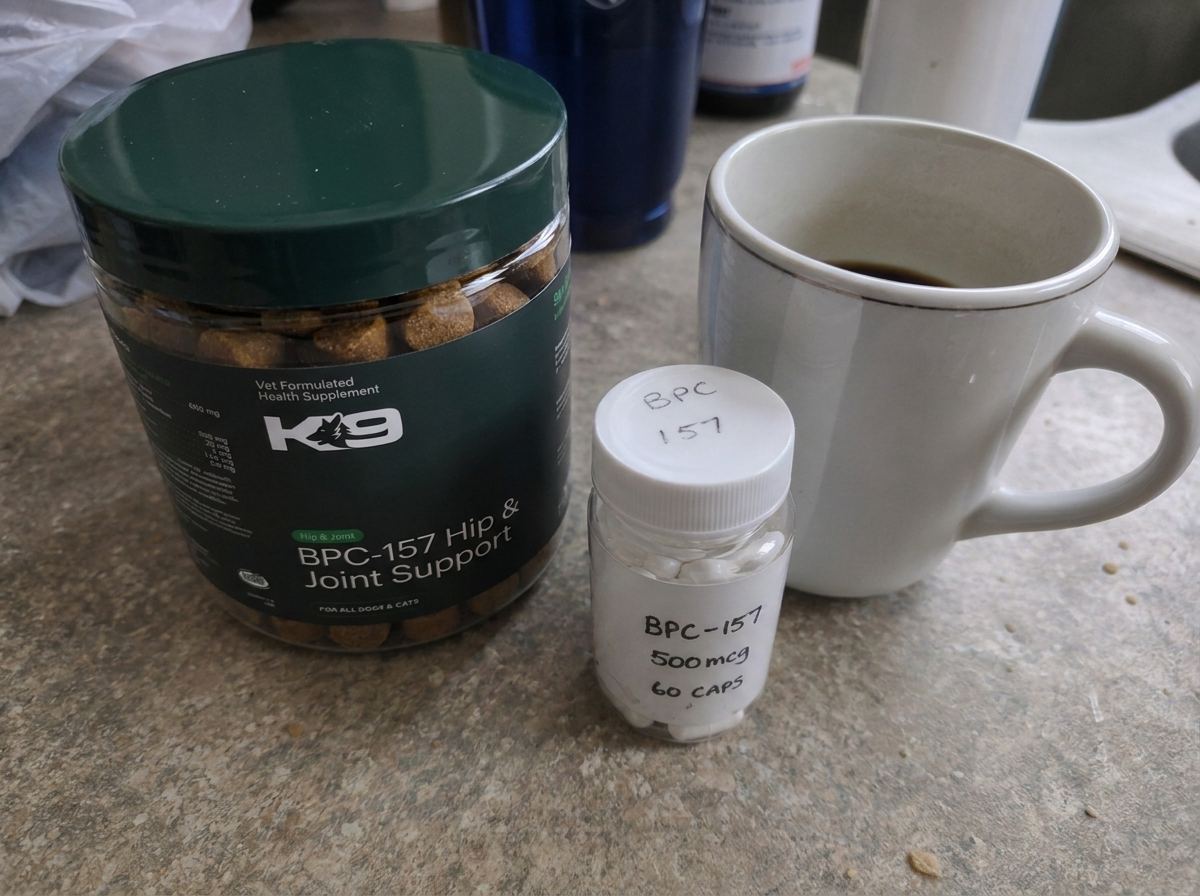
- 500 mcg BPC-157 per chew
- Cold-pressed — never heated
- Third-party tested after pressing
- Made in the USA
- 90-day guarantee, opened jar is fine
SAMPLE COMMENTS — REPLACE BEFORE PUBLISHING. Names and text below are placeholders written in the avatar's voice to show layout and tone. Swap in verbatim comments from real buyers (with permission). Do not ship these.